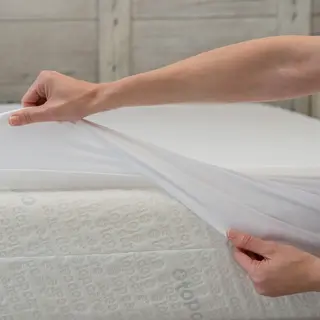
Why protect a bed with a reusable urine pad?
Incontinence, whether related to age, recovery after surgery, or a disability, calls for reliable equipment for staying at home. Adding our affordable range of washable underpads to the bed means choosing a very high-performance protective barrier. Built to absorb large volumes of fluid (urine, sweat, blood), they keep the mattress from breaking down early and help the person stay dry.
Beyond protecting the mattress, this product has a real medical role: it helps prevent skin maceration. For people who stay in bed a long time, constant moisture is the leading risk factor for pressure sores and dermatitis. Today's technical fabrics allow better temperature control and airflow than the old plastic-coated pads.
One product for many surfaces
Protecting the bed base and mattress is still its main job, and a reusable underpad comes in many formats (squares, rectangles, with or without flaps). That versatility protects other surfaces through the day:
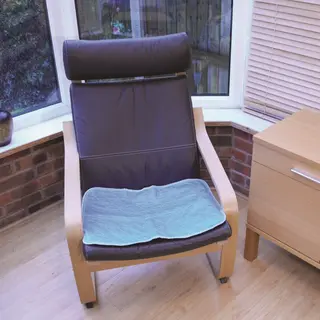
- Recliners and positioning chairs: To protect the seat during reading or daytime rest.
- Car seats: A practical way to protect seats on medical trips or long drives.
- Wheelchairs: Discreet, highly absorbent models fit the size of pressure-relief cushions.
Buying guide: How to choose a washable medical underpad
With so many options, a bedding protector should meet clear standards matched to the person's condition and body size.
1. Size and how it stays in place
The protected area should fit well. An underpad that is too small can slide, and a poorly secured pad can bunch into uncomfortable folds that threaten the skin (shear risk). You will find two main ways they stay put:
- A flat underpad (crosswise): It lies across the center of the bed. It often has flaps (or anchor bands) that tuck under the mattress so it stays in place. Ideal for hospital beds, because caregivers can work with it more easily.
- A fitted underpad (with elastic corners): It wraps the mattress like a regular fitted sheet. Recommended for people who move a lot in their sleep.
2. Absorption level (in ml/m²)
This is the technical heart of the product. Absorption should match the type of incontinence (light, moderate, or severe). Standard models generally absorb around 1.5 to 2 liters per m², while clinical-grade models (for heavy nighttime incontinence) can hold up to 3 or 4 liters of liquid, locking moisture away from the skin.
3. Multilayer construction and materials
A good reusable protector is a technical sandwich. It is generally made of:
- The sleeper side (top): In direct contact with the skin. Choose combed cotton, bamboo, or microfiber for exceptional softness and hypoallergenic properties.
- The absorbent core (center): Often polyester or viscose, it wicks liquid away and holds it quickly.
- The mattress side (bottom): It provides full waterproofing. Polyurethane (PU) coatings are the standard to look for: waterproof to liquids and still breathable, unlike PVC, which traps sweat.
???? Tous Ergo tip: For a standard hospital bed (90x200 cm), choose a crosswise underpad of 85x90 cm with wide 40 cm flaps. That covers the hip area and makes daily changes easier for a family caregiver or a nurse, without remaking the whole bed. Always keep a rotation of 3 underpads: one on the bed, one in the wash, and one in the closet.
Comparison: Washable underpad vs. disposable underpad
To help you choose well for your care setting, here is a detailed comparison of the two home-care options.
| Comparison criteria | Washable underpad (reusable) | Disposable underpad (single use) |
|---|
| Cost |
Very cost-effective over the medium and long term (pays for itself in a few weeks). |
High recurring cost for ongoing incontinence. |
| Environment & waste |
No daily waste. A smaller carbon footprint. |
A large volume of household waste (plastic and cellulose). |
| Comfort and noise |
Soft fabric, quiet (no ""crinkly plastic"" effect), breathable. |
Less breathable, and sometimes noisy when the person moves. |
| Recommended use |
Home, nursing homes, ongoing incontinence, people who are bedridden. |
Travel, short hospital stays, backup use, weeping wounds. |
Practical care benefits of a reusable pad
Choosing reusable fabric is a continuous approach to care, and it is easier on the environment as well. A washable protector offers major benefits:
- Skin protection: By encouraging airflow through the polyurethane membrane, you significantly reduce nighttime sweating and bacterial growth.
- Full discretion: Washable fabric stays quiet under body weight, which protects the person's dignity and the quality of their sleep. Some single-use pads crackle.
- Safer materials: Free of synthetic fragrance, latex, and the chemicals used to bleach cellulose, they are a strong option for people with eczema or contact allergies.
Hygiene routine: How to wash and disinfect a bed protector
To destroy germs (staphylococcus and bacteria linked to urine) and extend the life of your medical equipment, careful care is required.
Machine-washing steps
- Pre-treatment: If the pad has stool or clots, remove them while wearing gloves. For blood stains, rinse thoroughly with cold water (hot water cooks the blood and sets the stain).
- The wash cycle: Put the product in the machine. Use a regular detergent with no fabric softener. Softener leaves a greasy film on the fibers, which clogs the micropores and ruins the fabric's absorption.
- Disinfection temperature: Most of our technical models can be washed at 60°C, and even at 90°C (the deep-cleaning temperature recommended in geriatric care), for thorough hygiene.
- Drying: A dryer is often fine at a moderate temperature (synthetic setting). Air drying helps the waterproof polyurethane membrane last longer.