


$18.99In stock, ships tomorrow
Free shipping on orders over $20010% off with code WELCOME
Shop other styles
3 products

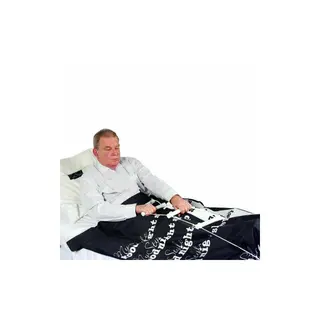
Setting up the bedroom and adapting the home are essential steps in supporting someone whose mobility is changing. To make everyday life in the bedroom easier, Tous Ergo has selected transfer aids for you. They make moves such as bed to chair, or chair to bed, much easier. Our transfer aids also help seniors and people with limited mobility sit up in bed more easily, or settle into a safer position. With transfer accessories, the person using them can manage these moves on their own.
A transfer — moving from one supporting surface to another — is when the risk of a fall is highest. A slip, a sudden muscle weakness, or a loss of balance can lead to serious consequences (fractures, bruising, and a loss of confidence). Specialized accessories offer three benefits:
There is a wide range of equipment for every stage of mobility. The right choice depends on trunk strength, grip, and how well the user can bear weight through the feet.
Each condition calls for a specific occupational therapy approach. Someone with paraplegia will not have the same needs as a person living with Parkinson's disease or recovering from a stroke (hemiplegia).
| Accessory type | Main use | Mobility the person needs | Typical profile / condition |
|---|---|---|---|
| Transfer board | Seated-to-seated transfer (bed/chair/toilet) | Good trunk tone, arm strength | Paraplegia, bilateral amputation |
| Swivel disc | Standing pivot to change seats | Weight-bearing on both feet (able to stand) | Seniors, general muscle weakness |
| Transfer belt | Help with standing and safer walking | Some leg support, needs assistance | Parkinson's disease, post-stroke rehab |
| Tubular slide sheet | Boosting and turning in bed | Bedridden, high level of dependence | Long-term bed rest, palliative care |
Transfer aids take heavy physical use and stay in contact with skin for long periods. Careful cleaning is essential, especially in a hospital setting or with regular home care. Boards and discs should be wiped daily with a soft cloth and a disinfectant spray (no harsh solvents, so the sliding surface stays intact). Most textile devices (belts, straps, tubular sheets) can be machine-washed at a high temperature (often 60°C or 90°C) to remove bacteria and help prevent cross-infection.