

$18.99In stock, ships tomorrow
Free shipping on orders over $20010% off with code WELCOME
Shop other styles
2 products
In France, a large share of home accidents among seniors over 70 are falls. These events are often traumatic, and they happen mostly in the bathroom and the toilet, but also in hallways and on stairs. Aging, loss of muscle tone (sarcopenia), balance problems, or certain neurological conditions mean the home itself needs to change.
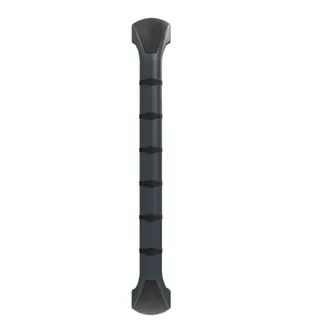
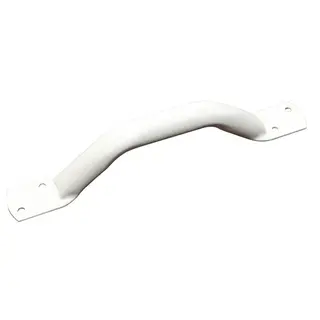
To make your home safer, keep you steady, and help prevent falls with serious consequences (hip fractures, post-fall syndrome), choose a support bar. They are a staple of occupational therapy. Support bars for people with limited mobility are designed to make moving, reaching, and transferring easier. They are built from sturdy materials (stainless steel, brass, textured ABS) and shaped for a firm, secure, non-slip grip, even with wet hands.
There is no one universal bar. There are solutions matched to how each movement works (pulling, pushing, steadying). The right choice depends on the room, the humidity, and the user's motor abilities.
Bathrooms are the rooms where accidents happen most. Shower support bars provide the safety and freedom of movement you need. They give you something to hold and lean on when you step over a shower curb or a tub rim.
Moving from sitting to standing puts heavy demand on the lower limbs. For wheelchair users or people with arthritis, the toilet setup is essential.
How your medical equipment is mounted is what your safety depends on. Here is a comparison to make the choice clearer:
| Mount type | Ergonomic advantages | Constraints & installation | Recommended use |
|---|---|---|---|
| Screw-in bar (wall mount) | Maximum safety. Supports heavy loads (up to 150 kg and more on bariatric models). | Requires drilling the wall. The anchor must be carefully matched to the wall (drywall, brick, concrete). | A permanent setup (shower, toilet, stairs). Users who need to put their full body weight on the bar. |
| Suction cup bar | No drilling. Installs in a few seconds. Travel models are well suited to trips. | Suitable only on perfectly smooth, non-porous surfaces (smooth tile, glass). Check the safety indicator before every use. | A balance aid (not a full pulling support). Rentals, travel, or a short-term occupational therapy trial. |
| Floor-to-ceiling bar (or transfer pole) | No wall mount. Uses a pressure pole between the floor and the ceiling. | Requires a solid ceiling (not for drywall drop ceilings). Takes up more visual space. | Getting out of bed, transferring near the sofa, or the middle of a large room with no load-bearing wall nearby. |
More and more renters, and people in short-term recovery (home from the hospital), do not want to drill their tile. Many newer models solve that problem. Used in the right conditions, these suction cup support bars have pressure levers that create a powerful vacuum. The latest models include visual safety indicators (green = a solid mount, red = lost grip, reposition it).
To work well, a bar has to follow specific geometry and the rules set by accessibility law. Those rules apply strictly to public buildings and new construction, but they are the best reference for a home.
The golden rule for grip height is to fit the bar to the user's body. If an occupational therapist has not given specific instructions: