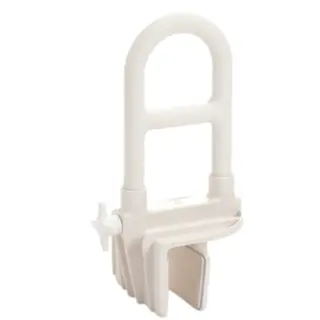
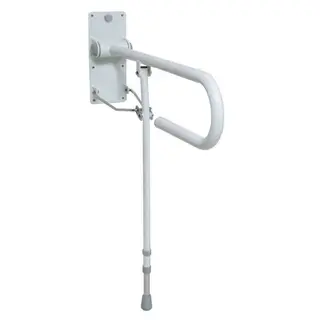
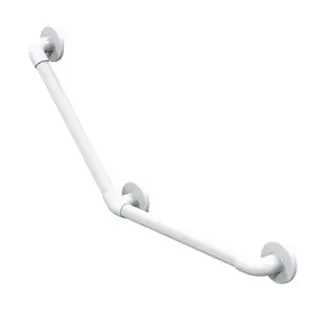
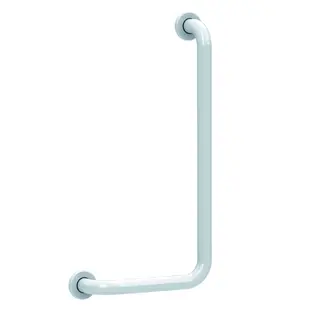
Why add a shower support bar to the bathroom?
Statistically, the bathroom is the most dangerous room in the house. Water, soap, and smooth surfaces (tile, shower base) create a setting where slips are very likely. A shower grab bar is not just a comfort extra. It is an occupational therapy essential for aging in place. For a senior who loses balance, or someone with musculoskeletal disorders, this wall anchor helps prevent serious accidents and eases the fear of falling, so personal care can stay independent.
Our support bars are sized for a secure grip. They make up for lost muscle strength, make transfers easier (for example from a wheelchair), and let you stand without getting overly tired, so you get a shower for limited mobility that meets real safety standards.
How do you choose the best grab bar for the shower?
A safe bathroom setup means choosing medical equipment that matches your body, your condition, and your walls. Here are the basics to weigh:
1. How it mounts: screw-in bar or suction cup?
How long the install lasts depends first on the mounting system. There are two main families of products:
- The fixed grab bar (wall-mounted, screwed in): This is the go-to choice for lasting, full safety. Screwed deep into the wall with the right anchors (drywall, concrete, brick), it supports the user's full weight in both pulling and pushing. It is essential for people with a larger build or significant motor disabilities (paraplegia, myopathy).
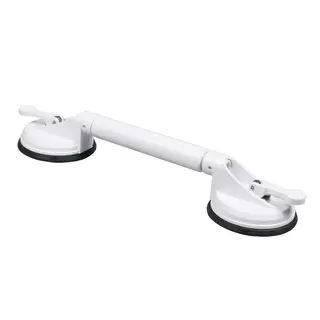
- The suction cup grab bar (removable): Ideal for renters who cannot drill tile, or for making a vacation stay safer for a short time. Note: this system works by vacuum on a perfectly smooth, non-porous surface (large tiles, glass). It acts as a balance aid and a physical reference point, but it is not designed to catch the full weight of the body in a hard fall.
| Shower bar type | Main advantages | Drawbacks & limits | Recommended user |
|---|
| Screw-in bar (wall mount) |
Maximum safety, supports a heavy body weight (100 to 150 kg+), extremely durable. |
Requires drilling the wall and choosing anchors that match the wall material. |
Limited mobility, seniors with a significant loss of independence, wheelchair users, after a stroke. |
| Suction cup bar (removable) |
Tool-free install in 10 seconds, portable (travel, hospital), does not damage tile. |
Does not support full body weight, and needs large, perfectly smooth tiles. |
Seniors who want a balance reference, renters, light post-surgery rehab. |
2. Ergonomics: shapes, angles, and grip zones
The shape of the support handle defines exactly how you use it in the bathroom:
- Straight bars: Versatile. Mount them vertically (at the shower entry, to step over the threshold) or horizontally (on the back wall, for support while washing). Lengths usually run from 30 cm to more than 90 cm.
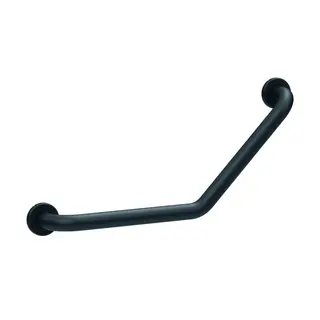
- Angled bars (often at 135 degrees): The asymmetric angle gives you two distinct support zones. The horizontal section steadies the hips or rests the forearm, while the slanted section helps a senior pull from sitting to standing without straining the wrists.
- T-bars: These often include a sliding holder for a handheld showerhead. It is the ideal 2-in-1 when you want the shower hardware and a secure handhold without crowding a small shower base.
3. Materials and textures: against slipping and wear
A wet, soapy hand loses much of its grip strength. The material you choose decides whether the hand slides on the rail:
- Stainless steel: Extremely strong, resistant to rust (corrosion), and a modern look (brushed or chrome). Make sure it has a knurled texture if gripping is difficult for you.
- ABS plastic or epoxy: These materials feel "warm" to the touch, unlike metal, which can feel cold. People with Raynaud's or severe arthritis often prefer that.
- A fluted or non-slip finish: Many bars have grooves or an elastomer coating that "catches" the palm, so the grip stays firm even under a steady stream of water.
Seniors, limited mobility, and disabilities: a solution for each condition
Loss of mobility takes many forms. A thoughtful setup for limited mobility should make up for that specific loss of function:
- Vision loss (macular degeneration, cataracts): Choose brightly colored support bars (red, deep blue, yellow) that contrast strongly with white tile. That immediate visual cue means you are not searching for the bar by feel.
- Arthritis and rheumatoid arthritis: Joint pain makes a tight grip hard. Choose a shower bar with a large diameter (32 to 35 mm) so you do not have to close the hand fully, and a soft coating to cushion pressure on the fingers.
- Hemiplegia or one-sided weakness: Place sturdy supports (angled bars) on the user's stronger side so they can compensate and turn safely.
A tip from Tous Ergo: A shower grab bar cannot do the whole job. For 360-degree fall prevention, pair this wall bar with a high-quality non-slip shower mat (to secure your footing) and an ergonomic shower stool. If you are very tired or dizzy, you can sit down while holding your angled bar firmly.
Installation and safety tips for your setup
How well a bathroom bar works is about 50% the product and 50% the installation. The maximum load (often listed between 110 and 150 kg) only holds if the wall mount is done correctly.
Always consider the wall itself. On a hollow wall (drywall), expanding metal anchors (Molly bolts) are required. If the wall is solid (concrete block, concrete), large-diameter nylon anchors are enough. Do not hesitate to call a qualified tradesperson or an occupational therapist to find the best anchor points in your home. And think about versatility: many grab bars made for the bathroom can also be installed to make the toilet area safer.