



$37.99$44.49In stock, ships tomorrow
Free shipping on orders over $20010% off with code WELCOME
Shop other styles
1 products
With age, or with certain eye conditions, the need for light rises sharply. A 60-year-old needs about three times more light than a 20-year-old to see the same level of detail. For years, Tous Ergo has offered a wide range of low-vision lamps to help with everyday tasks. Poor lighting can cause eye strain and headaches, and it greatly raises fall risk for seniors or people with limited mobility. Explore our lamps to support different parts of your daily life.
Make daily life easier with our lamp range. We offer magnifying lamps (low-vision lamps), motion-sensor lamps, light-therapy lamps, and even bulbs and accessories for your lamps. There is a model for you.
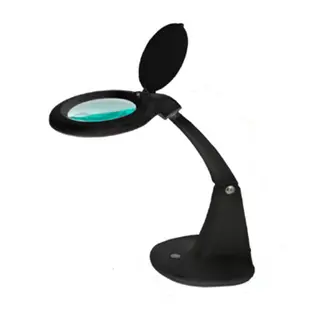
Need a reading lamp? Choose a magnifying lamp, also called a low-vision lamp. This kind of lighting is designed to reduce glare while increasing contrast. By casting a cool or neutral light, an ergonomic reading lamp lets you read a book, the newspaper, or a medication leaflet without overworking the retina. A magnifying lamp pairs shadow-free circular LED light with a magnifying lens (from 2x to 5x or more, expressed in diopters). It is the essential tool for precise handwork, sewing, or fine crafts.
Home safety depends on preventive lighting. Want to make nighttime walking safer and help prevent falls? It can be wise to install a motion-sensor lamp in your home! Placed in a hallway, near the bed, or on the stairs, the automatic night-light turns on the moment it senses someone. Seniors do not have to hunt for a switch in the dark, which sharply reduces the risk of fractures from nighttime falls (post-fall syndrome).
A lack of natural light, especially in fall and winter, can disrupt the circadian rhythm. We also offer lamps for light therapy, a technique with many benefits. These medical devices reproduce the intensity and spectrum of sunlight (up to 10 000 Lux) without harmful UV rays. A daily morning session blocks the release of melatonin (the sleep hormone), which helps with seasonal affective disorder (SAD), chronic fatigue, and sleep trouble in seniors who are often less active.
AMD affects central vision and makes reading extremely difficult. To compensate for that loss of acuity, a low-vision lamp is essential: it focuses a very strong, high-contrast beam directly on the reading area. Eye doctors often recommend a color temperature around 4000K to 6000K to make letters easier to decipher.
Glaucoma, which narrows peripheral vision, and cataracts, which cloud the lens, make the eye especially sensitive to glare. Lamps with anti-glare filters or articulated arms (gooseneck) are ideal because you can aim the light below eye level, lighting the task without shining straight into the user's face.
Choosing a light for a senior or someone with low vision should not be a guess. Here are the technical points to weigh:
| Lamp type | Main use | Health & independence benefit | Recommended intensity |
|---|---|---|---|
| Low vision / magnifier | Reading, writing, sewing | Reduces eye strain, helps with AMD | Daylight (5000K+) |
| Motion sensor | Hallways, bedroom, stairs | Nighttime safety, fall prevention | Soft light (3000K) |
| Light therapy | Desktop / table treatment | Supports mood and sleep | 10 000 Lux (at 20-30 cm) |
Finally, find bulbs and other accessories for your lamps in our shop. Regular care helps your equipment last. Dust LED bulbs and magnifying-lamp lenses with a dry microfiber cloth so the light spectrum stays well distributed. Choose our specific replacement bulbs (compact fluorescent or low-vision LED), designed to stay cool, so the user stays safe even with prolonged contact with the device.