



$8.99In stock, ships tomorrow
Free shipping on orders over $20010% off with code WELCOME
Shop other styles
1 products
When grip is difficult, or when muscle weakness or osteoarthritis gets in the way, it can be hard to hold utensils, turn a key in the lock, open a drawer, pull up a zipper, or work a door handle. To help with those tasks, Tous Ergo has selected grip accessories for you. They make daily life easier so you can do these movements on your own.
Losing fine motor control and grip strength (the ability to grasp and handle objects) is one of the first reasons independence at home slips away. Occupational therapy now offers clever medical equipment that makes up for those limits. The main goal is to reduce stress on the joints, ease pain, and help prevent secondary musculoskeletal problems caused by compensating movements.
Grip support helps at any age. Many medical conditions are a good reason to add these daily living aids:
The Tous Ergo catalog covers every room in the house so safety continues from morning to night. Here is how dexterity aids line up with a typical day.
Eating is a foundation of independence. To help prevent undernutrition and keep dignity at meals, several options exist:
Keeping your privacy matters. Pinching and pulling are often the hardest movements when fine dexterity is affected.
Moving around the house, locking the door, or picking something up off the floor takes a reliable overall grip.
Choosing a daily living aid takes a little care. As specialists in staying at home, we recommend checking these four fundamentals before you buy.
If you have tremor, choose weighted accessories (such as solid-steel utensils). If your condition causes muscle fatigue quickly (myopathy), look at lightweight polymers, aluminum, or silicone. Also confirm that the materials are hypoallergenic and guaranteed phthalate-free.
The diameter of a utensil or tool handle should fill the hollow of your closed hand. A handle that is too thin forces the fingers to clench hard, which leads to cramps. Always choose Soft-Touch, ribbed, or non-slip rubber coatings. They help especially if your hands are damp or you have lost some sense of touch.
Hygiene matters for medical equipment. Make sure mealtime and bathroom accessories can go through a high-temperature dishwasher or be sterilized, so bacterial growth stays limited.
| Issue you are facing | Difficult movement | Recommended accessory | Immediate benefit |
|---|---|---|---|
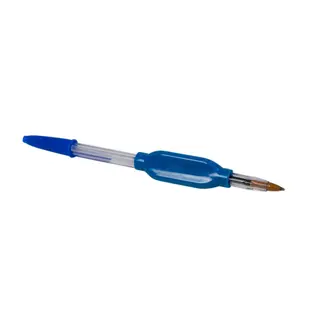
| Finger osteoarthritis / rheumatoid arthritis | Thumb-to-index pinch (buttoning, holding a key) | Key turner, button hook, built-up pen | Uses the palm instead of the finger joints |
| Muscle weakness / myopathy | Lifting, holding, squeezing hard | Electric jar opener, ultra-light reacher | Removes the force that would otherwise be required |
| Parkinson's disease (tremor) | Aiming, bringing food to the mouth, staying steady | Weighted utensils, nosey cup, high-rim plate | Reduces how far the tremor travels |
| Hemiplegia (after a stroke) | Using both hands (cutting, spreading) | Spiked cutting board, combination knife-fork | Full independence with one hand |