


Plastisol
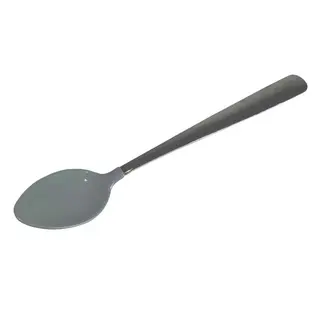
Cuillère à café Plastisol7 reviews•TE-224
- poids : 35 g
- matière : Acier
- longueur : 7.48 in (19 cm)
$32.49Ships in a few days
Free shipping on orders over $20010% off with code WELCOME
Shop other styles
1 products
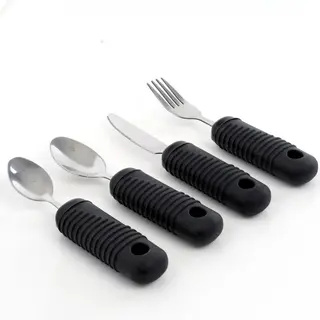
Seniors and people who have trouble with movement or grip can find a regular spoon hard to use, which makes eating on their own difficult. An ergonomic spoon helps them move past that barrier and stay independent at meals. By making up for limited function in the arms and hands, these medical devices, recommended by occupational therapists, bring back the pleasure of eating.
There are several kinds of ergonomic spoons, and each one answers a very specific movement problem:
An ergonomic utensil should be chosen with care. The right pick depends directly on the condition and on the user's functional assessment.
For people with neurological conditions that cause tremor (such as Parkinson's disease), the goal is to keep food from spilling. A weighted spoon is the best technical match. Its extra proprioceptive weight "anchors" the user's hand. Some models also have a swivel tip that keeps the spoon bowl level, no matter how the handle tilts.
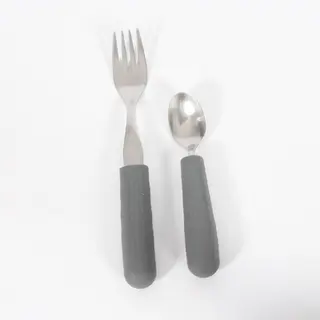
Severe osteoarthritis in the hands, or rheumatoid arthritis, brings intense joint pain and can deform the fingers. Closing the hand into a full fist becomes a struggle. A spoon with a built-up foam handle, or a non-slip rubber handle, is essential here. An angled spoon is also strongly recommended if the wrist, elbow, or shoulder is stiff.
After a stroke, or with a neuromuscular condition, it is common to lose all grip on one side of the body. A palm-strap spoon attaches directly across the back of the hand. You no longer need to press with your fingers: the utensil stays with your arm, so you can eat with one hand.
Before you finish your purchase, look closely at these essentials:
| Spoon type | Problem it addresses | Main benefit | Example condition |
|---|---|---|---|
| Thick handle | Hard to close the hand, lack of strength | Cuts grip effort and fatigue | Osteoarthritis, rheumatism, muscle weakness |
| Angled / adjustable | Limited wrist or elbow mobility | Removes the need to turn the wrist | Musculoskeletal disorders, ALS |
| Weighted | Involuntary jerky movements, tremor | Steadies the movement with a compensating weight | Parkinson's disease, essential tremor |
| Palm strap | Cannot close the fingers at all | The utensil stays on the user's hand by itself | Hemiplegia, partial quadriplegia, stroke |
The ergonomic spoon is the centerpiece for eating, and it belongs in a wider setup for an adapted meal. To make drinks easier to hold, look at nosey cups or ergonomic tumblers. For solid food, a plate with a raised rim, or a clip-on plate guard, lets you load the spoon more easily without pushing food off the plate.
Tous Ergo also offers universal handles and built-up grips so you can hold your utensils more easily without replacing them. These foam or silicone cylinders simply slide onto the handles of everyday flatware (teaspoons, soup spoons, forks), a practical and low-profile option.