Complete buying guide: make the bathroom safer with equipment for limited mobility
Want to make your bathroom work for people with limited mobility? Explore our range of equipment for an accessible bathroom!
You will find sinks, bathtubs, showers, and toilets for limited mobility, plus a full range of accessories that make them easier to use and make bathing easier (automatic soap dispenser, holder, suction-cup shelf and hook, soap dish, towel bar, tilting mirror, sink lift, and more). We also offer a selection of cleaners and disinfectants so every wet room stays truly clean.
Why adapting the bathroom is so important
The bathroom is the room where household accidents are most likely, especially for seniors or people with disabilities. Water, slippery floors, and hard surfaces (tile, ceramic) call for real care. Installing daily living aids and equipment and adaptations for limited mobility serves three basic goals, both therapeutic and practical:
- Fall prevention: By securing support during transfers (moving from standing to sitting, getting in or out of a bathtub).
- Preserving dignity and independence: Letting the user manage intimate hygiene with as little help as possible.
- Preventing musculoskeletal strain for caregivers: The right equipment (such as a height-adjustable sink) eases the back of a family caregiver or a care professional (nurse, home care aide).
The main types of daily living aids for an accessible bathroom
Accessibility brings together complementary devices, each designed for a different hazard in the bathroom.
1. Shower and bath area
Occupational therapists often recommend replacing a standard bathtub with a curbless walk-in shower. In-between options exist too. Several pieces of equipment are essential to make this area safer:
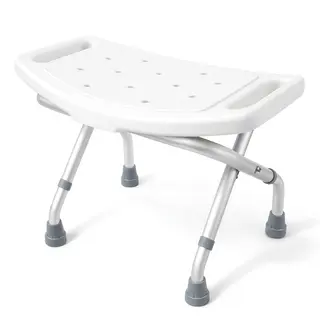
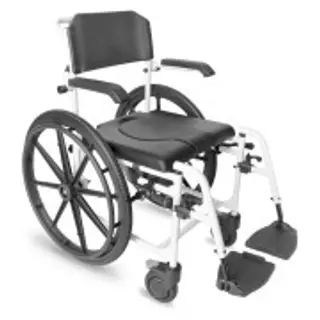
- Shower seats and stools: Wall-mounted, fold-down, or on height-adjustable legs, they allow a comfortable seated bath and help prevent muscle exhaustion.
- Bath boards and swivel bath seats: For people who keep their bathtub, this equipment removes the need to step over the rim, a movement that causes many accidents.
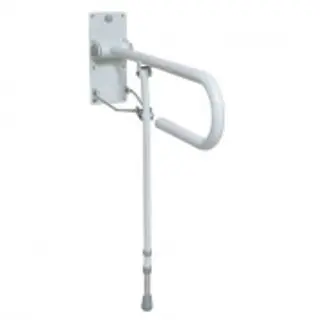
- Grab bars and support bars: Wall-mounted, or suction-cup models for temporary needs or travel, they give a secure grip thanks to a textured surface.
2. Ergonomic sink area
A sink for limited mobility has an open front so a wheelchair or commode chair can roll in smoothly. With no center pedestal, there is room for the knees.
- The sink lift: This mechanical, pneumatic, or electric system adjusts basin height whether the user is standing (a senior with back trouble) or seated (a manual or power wheelchair user).
- Clinical faucets: Long-lever faucets or infrared sensors make it easier to turn the water on for people with arthritis or rheumatism in the hands.
3. Toilet area
Standing up from the toilet bowl puts heavy demand on the quadriceps and on balance. Toilet adaptations for limited mobility aim to shorten that movement:
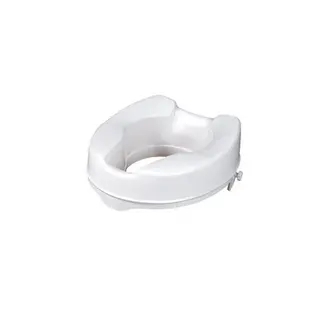
- Raised toilet seats: Soft or rigid, with or without armrests, they raise the seat by 5 to 15 cm.
- Toilet safety frames: Placed around the bowl, they give two stable handholds for sitting down and standing up safely.
How to choose medical equipment for a specific condition
Buying equipment for limited mobility should not be a guess. An assessment of motor and cognitive ability (often done by an occupational therapist) should drive the choice.
- For someone with hemiplegia or an amputation: Uneven strength calls for extremely sturdy support on one side. Angled grab bars at 135° and shower chairs with flip-up armrests are the better choice.
- For a senior with severe arthritis: A smaller range of motion makes movement painful. A high raised toilet seat and automatic soap dispensers (no hand pressure required) are ideal.
- For someone with Alzheimer's disease: The room should stay easy to read and reassuring. Choose high-contrast equipment (such as red grab bars on white tile) to help with trouble judging space.
- For a wheelchair user: Turning space (1,50 m in diameter at a minimum) is vital. A tilting mirror is essential here so the user can see well from a seated position.
Comparison chart: which equipment for limited mobility fits which need?
| Challenge | Recommended equipment for limited mobility | Direct benefit |
|---|
| Trouble stepping over the bathtub |
Bath board or swivel seat |
A safe seated transfer, and less risk of a hip fracture. |
| Tires quickly while standing |
Adjustable non-slip shower stool |
Independent bathing without wearing out the heart, lungs, or muscles. |
| Using a wheelchair |
Open-front sink with a mechanical lift |
Front access to the water, with clear room for the legs. |
| Loss of strength in the legs |
Raised toilet seat with armrests |
Less pushing effort when standing up (easier on the knees). |
Why small ergonomic accessories matter so much
Adapting a bathroom is not only about major work. Plenty of clever accessories make the daily routine easier. A tilting mirror lets a seated person comb their hair or shave without twisting. A well-placed towel bar or a suction-cup shelf keeps toiletries within reach, so you avoid dangerous bending that can cause dizziness (orthostatic hypotension). A non-slip mat treated against mold also makes the shower base safer right away.
A tip from Tous Ergo: Before you commit to a permanent install, test grab bar placement with suction-cup models that have safety indicators. That lets you confirm the best spot for your body (height, arm reach) before you drill the tile. Remember that a horizontal grab bar helps you pull yourself, while a vertical bar helps you push yourself upright.
Care, hygiene, and how long your equipment for limited mobility will last