



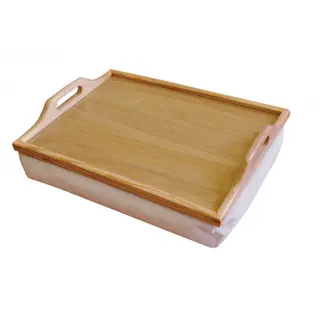
Plateau de lit avec coussin
TE-4998
- largeur : 11.81 in (30 cm)
- poids : 450 g
- matière : Bois
- hauteur : 3.94 in (10 cm)
$27.99In stock, ships tomorrow
Free shipping on orders over $20010% off with code WELCOME
Shop other styles
1 products
Setting up the bedroom is a key step in staying at home. A bed tray is a practical way to read, write, or eat breakfast while you stay in bed. Legs keep it steady once it is resting on the mattress. After surgery, with a chronic condition that limits movement, or simply for a senior's comfort, this positioning aid helps you keep doing things on your own.
Being able to manage simple daily tasks matters for both mood and physical health. A bed tray lets you eat on your own, with dignity, drink more easily, or enjoy hobbies that keep your mind active. You are not balancing a book or a laptop on your thighs, so you save energy and your muscles tire less.
A poor position in bed soon leads to neck, lower-back, or joint pain. A raised bed tray encourages you to sit more upright (often with an adjustable backrest or positioning pillows), which supports easier breathing and digestion at mealtimes. Less friction and less slumping also help prevent pressure sores when someone is in bed for a long stretch.
Some models have a tilting top that matches what you are doing. Others stay light and simple. These are the main types to know before you choose.
This is the classic model. It is extremely light, and people often choose it for meals (breakfast in bed) or light care tasks. Folding legs make it easy to store, and it takes up little space when you are not using it.
Built for easier viewing and a better posture, this tray uses a ratchet or another adjustment so you can raise the surface. It is the right partner for activities that last a while.
This model has no legs. It rests directly on your thighs. A microbead cushion forms the base and follows the shape of your legs, so the surface stays level even if you shift a little.
| Tray type | Main activity | Ergonomic benefit | Mobility needed |
|---|---|---|---|
| Fixed, with folding legs | Meals and drinks | Side-to-side stability and a secure, flat surface | Low to moderate |
| Tilting / bookstand | Reading, computer use, hobbies | Less strain on the neck and eyes | Moderate |
| On a microbead cushion | Versatile (bed, chair, sofa) | Follows your shape, with no pressure points | Good trunk control |
As medical-equipment specialists, we suggest you weigh a few physical and practical factors before you buy.
A standard bed tray usually supports between 3 kg and 10 kg. If you plan to set down a full meal with a full water carafe, or a heavy laptop plus books, always check how strong the legs or hinges are. A weak structure can tip hot liquids and burn the person in bed.
The material is about more than looks. It is also about hygiene and safety:
The space between the two legs (the sitting width) should be wider than the person's hips, with at least 5 to 10 cm of comfort room on each side. That lets you move your legs under the tray without bumping it or tipping it. A usable width of 60 cm is the usual recommendation for a typical adult build.
Occupational therapists often recommend a bed tray for several conditions: