



From$44.49Ships in a few days
Free shipping on orders over $20010% off with code WELCOME
Shop other styles
3 products
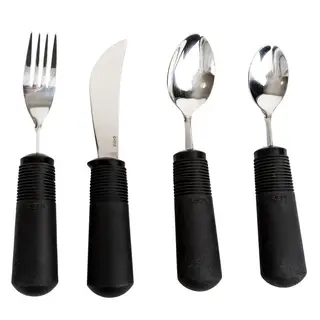
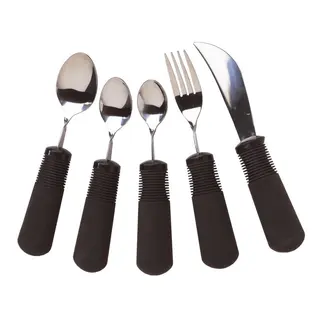
So seniors, and anyone with limited hand control or a weak grip, can eat on their own, Tous Ergo has selected ergonomic utensil sets and grip aids. In our utensil sets and grip aids selection you will find flexible and angled utensil sets, an Alzheimer's dinnerware kit, and complete meal cases. We also offer several ways to build up the handles of utensils you already own, so you can keep using them.
Eating is one of the most basic activities of daily living (ADLs). A weaker grip, joint pain, or tremor that will not settle can quickly turn a meal into a physical and emotional ordeal. Adaptive utensils help lower the risk of poor nutrition, protect dignity, and support functional rehab of the arm and hand.
The right tool depends closely on the clinical picture and on the movement that is still there. Our options are aimed mainly at the following:
To choose well, look at how the person moves. Does the thumb-and-index pinch still work? Can the wrist turn far enough to bring a spoon to the mouth without spilling? Those are the basics to weigh.
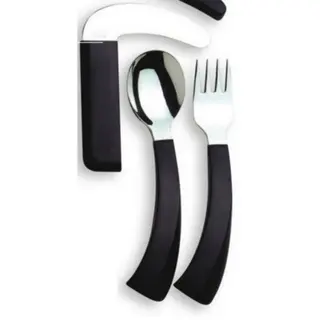
Angled and flexible utensils change how a meal can feel. They make up for a wrist or elbow that will not rotate. On flexible models, a caregiver or occupational therapist can bend the neck to the right or left, to the exact comfortable angle for someone with limited mobility. That spares the shoulder from painful compensation.
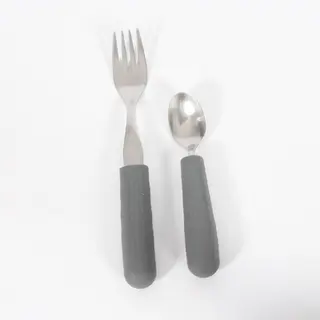
A handle that is too thin demands a hard palmar squeeze. Our ergonomic utensil sets use wide handles, round or shaped to the hand, often covered in non-slip materials (TPR, silicone, rubber). Those surfaces stay easy to hold even when the hands are wet or sweaty.
If someone is attached to a regular flatware set, we offer cylindrical foam tubes. These hollow sleeves slide onto the handles of your own forks, knives, and spoons and instantly widen the grip. It is an affordable, low-profile, and very effective option.
| Type of solution | Main conditions | Main ergonomic benefit |
|---|---|---|
| Weighted (heavy) utensils | Parkinson's, essential tremor, ataxia | Dampens extra movements and steadies food all the way to the mouth. |
| Ultra-light utensils with a large handle | Severe osteoarthritis, rheumatoid arthritis, muscle weakness | Cuts the squeezing effort in the fingers and protects the joints. |
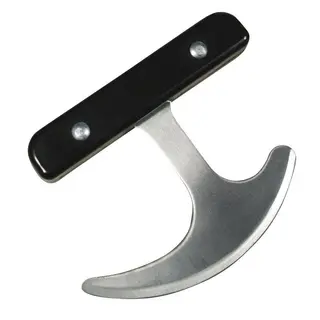
| Rocker knife | Hemiplegia, amputation, carpal tunnel syndrome | Lets you slice food with one hand, using a simple rocking motion. |
| Foam tubes and holding straps | Partial quadriplegia, curled fingers (multiple sclerosis) | Keeps the utensil in the hand even when grip is very weak or absent. |
Hygiene matters with any eating aid. The large majority of our ergonomic utensil sets are made from stainless steel and medical-grade plastics. They can go through a home or commercial dishwasher, which clears bacteria thoroughly. Foam pieces (such as handle-buildup tubes) can be washed, but high heat wears them out faster. Replace them regularly, because the foam becomes porous.