


$24.49Ships in a few days
Free shipping on orders over $20010% off with code WELCOME
Shop other styles
1 products
Safety for people with limited mobility matters in every room, and it is especially critical in the bathroom, which is often wet, slippery, and tight. Home-accident figures are sobering, and they show why fall prevention and aging in place matter so much.
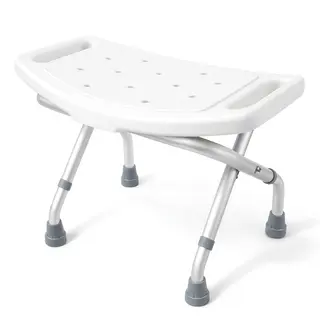
That is why quality medical equipment matters. Browse our shower accessories for people with limited mobility. We carry a wide range of products that make bathing and showering easier: walk-in shower accessories, suction-cup holders, ergonomic seats, and scald protection.
Turning an ordinary bathroom into a fully safer space means rethinking how the room works. The goal is to cut down on sudden movements, make things easier to grip, and give you steady support. These are the product categories that get you there.
Water on the tile is the enemy of independence. A slippery floor sharply raises the chance of a slip. To help prevent falls, Tous Ergo offers a range of accessible shower screens for support and stability. These guards, often half-height, let a family caregiver or aide help someone with limited mobility without getting soaked, while keeping water inside the walk-in shower base. They also give a reassuring visual and physical landmark.
Bending down to pick up a bottle of body wash is extremely risky for someone with balance trouble, arthritis, or dizziness. Supplies need to sit at a comfortable height. We have picked practical options, such as wall shelves so everything is within reach. Mount this storage between 90 cm and 130 cm from the floor to avoid dangerous bending and keep bathing movements smooth.
For people with serious conditions, multiple disabilities, or a complete loss of independence, a standard seated bath is no longer realistic. A nurse or caregiver has to help. For full safety, choose our shower trolleys to prevent falls. These premium medical devices, height-adjustable on hydraulic or electric lifts, allow a full bath while the person is lying down, protecting the patient and sparing the caregiver's back.
Reduced skin sensation (often linked to diabetes or age) can make it hard to feel water that is too hot, which raises the risk of serious burns. Weak hands (arthritis, rheumatism) also make a standard showerhead hard to manage. For burn risk in the shower and grip trouble, we offer a wide choice of ergonomic handheld showers. Non-slip handles and trigger controls let you run the water with one hand. Go ahead and equip the bathroom against falls and household accidents.
With so many daily living aids on the market, it helps to look at your specific needs before you buy. Here are the key points our occupational therapy experts recommend:
To help you plan the room, this chart matches mobility level with the medical devices that fit best.
| User profile / condition | Recommended equipment for limited mobility | Main benefit and safety |
|---|---|---|
| Independent senior who tires easily (Arthritis, heart conditions) |
Lightweight shower stool + non-slip mat + suction grab bar | Allows regular pauses during bathing and makes small thresholds (the shower curb) safer. |
| Severe balance disorders (Parkinson's, after a stroke) |
Shower chair with backrest and armrests + ergonomic handheld shower | Steady trunk support, less risk of tipping backward, and a firm hold for standing up. |
| Wheelchair user (Paraplegia, muscular dystrophy) |
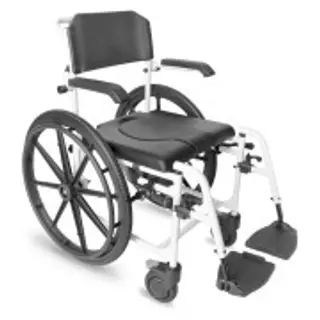
Fold-down wall shower seat or rolling shower commode chair | Makes a direct sideways transfer from the wheelchair easier. The fold-away seat frees the space for the rest of the family. |
| High dependence / bed-bound patient (Multiple disabilities, end of life) |
Height-adjustable shower trolley + protective shower screen | Allows an easy transfer from the hospital bed. Care staff can give a full bath in complete safety. |