


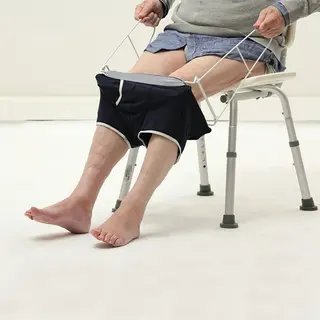


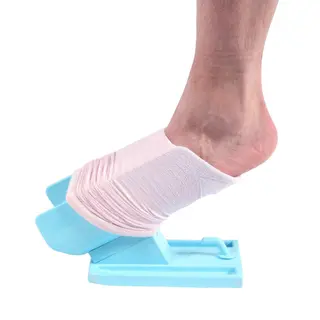
Pince d'aide à l'habillage
TE-1581
- largeur : 15.75 in (40 cm)
- couleur : Gris
- longueur : 16.54 in (42 cm)
$5.49In stock, ships tomorrow
Free shipping on orders over $20010% off with code WELCOME
Shop other styles
1 products
On Tous Ergo, you will find accessories for building closets for people with limited mobility. Getting dressed is one of the first things you do each day. If someone has a disability, is a senior losing mobility, or uses a wheelchair, a standard closet is not always easy to reach. Shelves that sit too high, dark corners at the back of the closet, or hangers that are hard to reach on the rod can turn a simple task into a real obstacle course, and that limits independence.
Installing an accessible closet answers basic needs for aging in place:
With our dedicated accessories, you can reach the closet rod more easily, adapted to your range of motion or to a seated position.
This is the centerpiece of an accessible closet. A pull-down rod brings the hanger bar down to your height. If the arms are strong enough, a manual-pull model with a long reach handle is ideal. For people with severe muscle weakness (myopathy, partial quadriplegia), an electric tilt system that is motorized and controlled by a remote is the perfect way to lower clothes to wheelchair height with no effort at all.
Skip deep fixed shelves where clothes pile up out of sight. Full-extension drawers or sliding metal baskets bring the contents right to the user. From a seated position, a pull-out drawer lets you see underwear or sweaters at a glance, without twisting the lower back.
Accessibility is also about seeing clearly. Vision loss is common among seniors, and LED light bars with a motion detector that turns on when the doors open give enough contrast to tell colors apart and choose clothes easily.
Storage for someone with a disability should be planned, not improvised. Here are the essential points to consider before you choose accessories on Tous Ergo:
| System type | Main advantages | Which user profile? | Installation |
|---|---|---|---|
| Fixed low closet rod | Affordable, no mechanism, very durable. | Wheelchair users with good trunk mobility. | Very simple (wall or cabinet mount under 1m30). |
| Manual pull-down closet rod | Lets you use the full height of the closet. Affordable. | Seniors and people with limited mobility who have enough arm strength. | Intermediate (hydraulic struts to mount). |
| Electric tilt closet rod | No physical effort, full independence, remote control. | People with disabling conditions (ALS, MS...). | Needs an electrical connection. |
Whether the layout is meant to ease a senior's rheumatism, to support the loss of independence that comes with Parkinson's disease, or to outfit an independent home for someone with paraplegia, choosing an adapted closet changes daily life. Pair our reach accessories, our tilt systems, and furniture sized for the room, and you support aging in place with real comfort and dignity.